Showing posts with label Internet. Show all posts

Tuesday, January 25, 2011

The Genesis of the "Edvitorial"

Beginning early of last year, many fashion brands and retailers began to seriously reconsider the potential of online sales and digital media. Though many at first were pessimistic about it's capabilities, 2010 birthed a wide range of fresh, innovative ideas, as mentioned in our earlier posts: technologically-advanced fitting rooms, iPad apps, blogzines, and unconventional curated online-shops, just to name a few. So, naturally, this year is sure to bring about more ingenious discoveries and experiences, as last year was a time of just simply scratching the surface. Today, we focus in on the emerging trend of brand content, a combination of content, commerce, and fashion, as we see it as the number one fashion marketing trend to watch for in 2011.

photo via: Net-a-Porter

To start, Net-a-Porter, the widely successful online luxury boutique, recently introduced a "magazine" section to their site. With weekly issues, their digital magazine has everything a traditional paper copy would have: articles featuring new designers, reviews of the latest films, inspiration shots behind their photo shoots, and trend reviews of what's in for next season. But what's even better is that the content is directly connected to their online shop. It's true that it's not the same experience as physically holding a fresh glossy magazine in your hands to browse at your perusal, but clicking through a highly funded, well-executed online zine and then having the ability to immediately buy what you see is pretty neat, (and maybe even better). Their men's department, MrPorter.com, is also moving into a similar direction as they recently hired Jeremy Langmead, former editor of British Esquire, as it's new editor in chief.

photo via: WWD

Designer and commercial brands alike have also followed suit with similar ideas to engage their guests: Donna Karan shares her "journal", Tory Burch offers her city guides, Anthropology has The Anthropologist, Alice+Olivia shares their 4 AM Finds, and Club Monaco has it's own Culture Club. Even Best Buy, the mega electronic store, recently saw in-store sales shrink under pressure from the Web and in response, launched On, a digital mag-a-log with editorial content and advertisement from other brands. Catered to electronic enthusiasts, they offer everything from gift ideas, product reviews, "Geek Squad" tips, and tons of how-to's for your new toys and gadgets. Realizing that there are more people online, many brands are realizing the importance of generating conversation with their customers and keeping them interested through this new platform.

photo via: eBay

Earlier this month, eBay hired Andrea Linett, former creative director of Lucky magazine, and appointed her as their new creative director of eBay Fashion. Attempting to enliven the experience of online shopping to a more digital flea market, they are working on adding more upscale imagery to recreate the same feel of a glossy magazine. With an edition of flash sales and exclusive collections with designers like Derek Lam, eBay is on it's way in establishing it's presence in the online fashion and apparel industry.

Since bloggers have really pioneered the way for the marriage of fashion and social media, it only makes sense that Tumblr, the image-heavy platform, hired Rich Tong, the founder of the user generated street style site Weardrobe.com, and appointed him as the newly created role of fashion director. One of their first events include sending 20 of their bloggers to the upcoming New York Fashion Week and hosting a real-time feed of their content at Tumblr.com/nyfw. Participating Tumblrs include What I WorePeace, Love, Chanel; and SaraZucker.com. All bloggers will receive complimentary flights, accommodations, dates with brands and designers, and access to several shows. They will also be attending the Independent Fashion Bloggers' conference and the Bloglovin awards. 

Although Tumblr did not begin as a fashion-focused blog site, it has become a host to thousands of fashion bloggers, largely inspiration-based blogs, posting product shots, runway images, and editorials. They are valuable to brands as their sites are like free advertisement, reaching young fashionistas all across the world in a powerfully influential way through peer recommendations and conversation. Making fashion more transparent, bloggers have become an invaluable asset to many brands today.
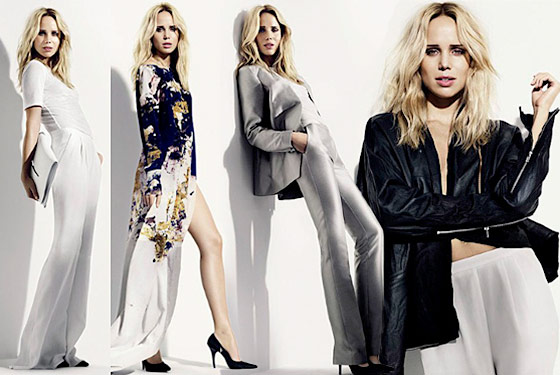

H&M has taken blogger collaborations to the next level and launched a limited collection with the Scandinavian personal-style blogger Elin Kling as the guest designer. With a list of past collaborators including renowned design houses like Lanvin, Stella McCartney, and Karl Lagerfeld, H&M's decision to collaborate with a blogger who only launched her site in 2007 reflects a huge shift in who the customers are looking up to for style inspiration.

14-year-old blogger Tavi Gevinson also found blogging as a stepping stone to achieve greater opportunities, appearing in articles for US Harper's Bazaar, Teen Vogue, and holds future plans to launch a new magazine with Jane Pratt, founder of the now defunct Jane magazine.

We no longer live in the times where publishing, media, and retail businesses act as separate entities. The future calls for a more integrated way of doing business; the lines have blurred and multi-tasking is essential to every fashion professional's resume.

WWD names this new marketing tactic as "edvertorial", advertising meets editorial, birthed from social media and the convergence of entertainment and marketing. Tom Jarrold, chief marketing officer at A|X Exchange states, "The effect on the consumer is a more rich experience. It's a message that can be a part of and interact with instead of it being broadcast at them." If done correctly, advertising is less in-your-face and more subtly integrated to the modern shopping experience. Instead of feeling hassled and bombarded by retailers, customers are more excited to shop as companies have learned to ingeniously incorporated marketing skills through a combination of social media and capabilities of the digital platform.

As the online world offers an infinite amount of space and a world-wide audience, companies have more flexibility and creative capabilities to drive their businesses. However, creating content that people will pay attention to while being careful of presenting the right personality to the brand is key. With this new trend, not only will we be seeing innovative brand strategies, but also a shift in job roles and skill sets. What we are seeing now is just a glimpse of what we mentioned earlier in our video last year. It's exciting to see and we are definitely keeping our eyes open to share with you with what will happen next.

Tuesday, November 23, 2010

Geek and Chic

photo via: Boutiques.com

When interested in scoping the latest fashion trends, Google is probably not the first place of choice to pop up into your head. Unless you are using Google.com as your search engine, it probably has nothing else related to your next season's wardrobe.

However, Google has shocked the online community last Wednesday, circulating lots of buzz with their new e-commerce website Boutiques.com. As if their own online search engine, Gmail, and Youtube wasn't enough to manage, they have now taken a dip (or more like an Olympic dive) into the pool of the fastest growing categories on the Web - apparel, accessories, and footwear.

Similar to existing online shops like Shopstyle.comRevolve Clothing and Retail Therapy, which have all been around for some time, Boutiques.com allows consumers to create their own shops with real merchandise to buy. However, what is unique about Boutiques.com is that these shops can be shared, creating a new world of social networking in the e-commerce world. Celebrities, designers, and even bloggers have already set up their own "boutique" so consumers can shop and dress like their favorite style muse or brand, whether it's the fashion house Marchesa, American designer Diane von Furstenberg, actress Sarah Jessica Parker, TV reality star Olivia Palermo, or bloggers Susie Bubble and Rumi Neely. For those who are more trend driven, boutiques can be explored through a refined selection of trends, ranging from Classic, Romantic, Street, and Boho. Using the same lingo as Twitter, you can "follow" these boutiques and keep a list of your favorite shops.

photo via: Boutiques.com

Google has a huge advantage over other mega sites like Amazon and Ebay, which have both been trying to improve their apparel sector for years. It is much more understandable to consumers to go to Google's Boutiques.com for a $1,000 designer dress rather than Amazon and Ebay, which are more about finding you the best deal for your dollars. Boutiques.com is less interested in finding you a money-saving purchase and rather much more interested in giving you a new, exciting shopping experience. With Google's popularity and the more or less blank attachments to Boutiques.com (in comparison to Amazon and Ebay), they have a clean starting ground with millions of eager online consumers.

photo via: Mobiputing.com


And to go above and beyond, Boutiques.com also just launched their free iPad app with user-friendly interface, making today's iPad shopping as close to the real deal of browsing clothes on an actual clothing rack. Greeted with a welcoming chime when you launch the app, it is similar to the sound you hear upon walking into a shop. All about imagery with very little text, storefronts can be browsed by a flick of the finger. 

Combining the latest trends of social media, online shopping, and the idea of the curated, Boutiques.com is a product of what consumers are demanding today. It is a genius concept of combining something new with the familiar, making it an excitingly fresh concept that is completely adaptable to today's culture. Using language and visual layout that is now second nature to most of us, this site may quite possibly be a huge indicator of where the retail industry is headed next. If you are like many of us here at MBF where we use Google's Gmail for email, Blogger for blogging, and Youtube for videos, you may be asking yourself "How dependent have we become to Google?!"

Friday, August 27, 2010

E-commerce CMS For Your Mobile Business

Content Management System (or CMS) — the computer program or the system used for the organisation of joint process of creation, editing and management of text and multimedia documents (or any...

Wednesday, June 23, 2010

You Are Your Own Designer

photo via: NY Times

In our earlier post, we discussed the recent trend of online shopping sites empowering online communities to take part in dictating trends and design picks. While the sites we previously mentioned discuss how designers first upload their collections and then the customers vote on their favorite, today we introduce you to Blank Label, a customization-focused concept brand that allows its customers to take part in the complete design process, from the initial stages of fabric and color to the final style, design detail, and fit. Fast, convenient, and affordable, Blank Label focuses on customized men's shirts with step-by-step online instructions, allowing customers from anywhere around the world to purchase a co-created product.

photo via: Blank Label

The success of Blank Label reflect the times of today where customers are not only more educated about fashion, but also want something more than just the traditional shopping experience of walking into a store and making a purchase from what is presented. The fact of the matter is, we live in a deeply customized-centered culture. Whether it is choosing our toppings at Pinkberry, placing a photo into our desktop background, or decorating our smart phones with skins and cell phone accessories, we like to have choices and feel unique. Do a Google search of "customized" anything -- customized stickers, wallpaper, towels, etc. -- you are sure to find a store that will do it for you. With globalization and technology, practically everything we purchase is made in mass quantities. Therefore, the ability to customize is, and will continue to be, essential. It offers a sense of ownership and a deeper personal relationship between the object and it's user, making the product distinctive from the rest.

photo via: Vans

And fashion is no exception. We are aware that Blank Label is not an entirely revolutionary concept; let's not forget that footwear brands like Vans, Nike, and Converse have all been offering customized shoes for some time now. But nonetheless, Blank Label's focus on tailored shirts is a simple yet brilliant concept that we are excited about. So instead of giving you our opinion, we take you straight to the source as we reached out to one of the founders, Danny Wong, for a quick interview to share with our readers.

1. Please tell us a little bit about yourself and the company. 
Blank Label is the brainchild of Fan Bi and Danny Wong, two young entrepreneurs looking to change the way men shop, starting with co-created dress shirts. Our other two founding partners are Zeeshan Muhammad and Alec Harrison. We have been around for about six months now, launched in November 2009. We value affordable luxury and the ability to design-your-own, or co-create your own, products, since standard styles and sizes do not work for everyone. Consumers should be able to get a product individually made for them, at a less-than-outrageous price. That's why our custom dress shirts start at $45. 

2. How did you get the idea of starting a customized shirt business?

Fan and I loved the idea of custom clothing, and we wanted to put a real neat spin on it. We originally ran Blank Label as a custom tailor shop selling suits and dress shirts, which would be made-to-measure, but the business had some issues of its own. We decided to scrap that business and build something we thought was sexier. Something that would be far more appealing than something your local tailor would offer. We chose the co-created dress shirt because you could really customize every aspect of the dress shirt and still look casual and not over-the-top. I suppose it was also a great test product too, and we were right because we've been doing co-created dress shirts ever since we launched.

3. Who is your customer? How international are your clients?
Our customer is the new-age male who is slightly metrosexual, cares about his style, appreciates a good fit, hates buying off the rack since most other guys can buy the same shirts, and is a middle to middle-upper class male. Most of our customers are US local, but our other big markets are the UK, Spain and Australia.

4. You are based in Boston, but the shirts are made in Shanghai. How did you determine which factory to work with and how do you regulate the quality & production of your factory?

We are currently in Shanghai for the summer, but when we first set up production, we visited a decent amount of tailors and production facilities and found one we had great synergy with. We have someone who is paid for Quality Assurance, so we are confident our product is quality while still being affordable.

5. Do you have any plans to expand Blank Label and offer customization for other types garments? Womenswear?
We have thought about doing women's custom dress shirts, but we don't because we aren't ready to expand, plus we are only four guys who don't know enough about women's fashion other than what looks good and what doesn't on a woman. Other thoughts have been going back to doing suits, maybe trousers, jackets, boxers, etc. 

6. What has been the most challenging part of running Blank Label?

The most challenging thing has been building demand for co-created product. Most consumers are happy with product and industries the way they are now, but we are looking to influence consumers to be more co-creation conscious to have more men actively searching for co-created dress shirts, which mean more business for us, and more supporters of co-creation, which is just good overall because we are looking to change the world so in a few years, anyone can get a whole custom outfit they co-created without paying a premium price, even if Blank Label didn't co-create it. 

7. As technology is advancing, how do you see the fashion retail industry changing over the next several years?

The Fashion retail industry might start using more advanced tech like augmented reality, hologramming, or just better designer applications where consumers can easily design product without ever using a needle or thread. 

8. Where is your fabric from?

Our fabric is sourced here in mills in China. 

9. What is your view on the rise of eco-friendly fashion?

Eco-friendly fashion is definitely a valuable market. Consumers want to reduce their carbon footprint and if they can get a nice product and know they are helping the environment, they are happy. 

10. Do you offer eco-friendly options? Is Blank Label eco and/or socially conscious? And if so, how?

While we do not have eco-friendly fabrics, we operate as a eco-friendly business because we are not wasteful like most retail stores since we only produce product when consumers demand it. Normal retail stores try predicting demand and there's an inefficiency there because they might underproduce which just makes for a lot of 'wanting' customers or they might overproduce which leads to waste when they can't sell off product, especially with high-end fashion which would prefer to burn clothes rather than discount them to sell all inventory or give them away to charity since they do not want to devalue their brand. 

11. For anyone else interested in a start up company, what are some of the lessons you have learned and can share from your own experience?

Some lessons we've learned are that you have to be prepared for scary surprises, and good surprises as well because sometimes good things can turn bad, really quickly. Understand that crazy things happen, and be very flexible with your business too. Being customer-driven is also very important because you live and die by your customers so taking their advice to heart is incredibly important and using their suggestions to improve your business is a valuable way of leveraging user feedback.


Thursday, February 25, 2010

LVMH's NOWNESS

                  still from Lily donaldson's Flying Hair via: Nowness

We live in a time where ideas are constantly being thrown around from all sorts of places and angles. Living in a global society, the Internet has become the central hub for ideas to be communicated, shared, and evolved. LVMH has grasped this concept and recently launched a luxury lifestyle site, NOWNESS, where new content is shared daily by the most respected and innovative creatives working today. 

A place to be inspired, NOWNESS introduces the latest and best of fashion, art, culture, and travel in digital form. With interactive capabilities and user-friendly interface, its allows viewers to engage with the site as it then tailors the content to the viewer's specific interest. With it's "Love/Don't Love" feature, they are also able to directly gauge consumer reaction to products and ideas, setting up a new system of user testing and gathering information. 

Although NOWNESS is a brand of the luxury group, LVMH, the content is editorially independent and the NOWNESS international team collaborates with any creative individuals and brands. As content is the most important focus of the site, there is yet to be any revenue model. But as the site grows, it expects interest from advertisers. 

Because much of luxury is about tradition, the luxury market has always been a bit slow in adapting to online media. But NOWNESS has taken the leap as it experiments with new capabilities and sharing of ideas through the Internet. While it's approach is relevant to today's society, it remains faithful to the luxury lifestyle with it's forward-thinking approach to creativity and innovation. The concept of NOWNESS is not a completely new idea, but an evolution of what has been happening in social media such as blogs, Twitter, and Facebook. 

We live in a time where it is crucial for luxury brands to re-strategize and re-market themselves in order to stay on top of today's technologically advanced society. The power of the Internet is becoming increasingly important as it is continually being explored and expanded. We are eager to see how NOWNESS develops and differs itself from today's never-ending list of online editorial sites. But we also expect that this trend of online presence will continue to grow as other brands imitate with similar concepts. 

Friday, September 25, 2009

The future of fashion is virtual.

As Fashion Week evolves from industry event to public phenomenon, designers have been contemplating how to keep their shows exclusive while making all of their customers feel included. Fashion's Night Out, while not a financial success, was a big step toward the democratization of Fashion Week, letting the public meet (or at least gape at) influential designers and buy in by, well, buying in.

Twitter-happy designer Alexander McQueen has another idea. His shows have always been as much performance art as fashion showcase, featuring real flames, live insects, giant chess sets, heaps of rubbish, and a hologram of Kate Moss among their wonders over the years. With video of previous shows already available on his website, he's involving the public in real time this season by broadcasting the SS10 catwalk live over the internet. And he's not the only one: Burberry, Sienna Miller's Twenty8Twelve, Michael Kors, and Isaac Mizrahi already did the same this spring; while some designers on a budget, like Shipley & Halmos, flipped the equation (above) by presenting their designs via video at their Fashion Week shows.

Photo via Racked