Showing posts with label marketing. Show all posts

Wednesday, February 9, 2011

Two is Better Than One

We are all familiar with the proverb, "Two is better than one." And in the retail industry, this saying goes a long way. In a world of today where new ideas come and go on a daily basis, creating a product that rises above and beyond all the others, and lasts, is not an easy task. 

Which is why Bob McDonald, chief executive of the world's largest consumer goods company, Procter & Gamble, states that "the road to more innovation should increasingly embrace other people's good ideas." McDonald was not the first to come up with this tactic for it's company, as it is something P&G have been aiming for over the last decade.

photo via: Financial Times

In 2001, P&G launched its Connect & Develop Programme as a more purposeful way to work with outside partners in pursuit of "open innovation." A.G. Lafley, its then chief executive, wanted at least 50 percent of its new products to involve an outside partner. P&G was able to fulfill Lafley's request within four years, and with successful results. According to IRI, the market research firm, P&G produced five of the top 10 non-food product launches in 2009. Products include Tide Total Care and Procter & Gamble Always Infinity feminine care brand. Tide Total Care was developed with external research from Sweden's University of Lund and from two small chemical companies. Always Infinity used a patented absorbent foam material from a manufacturing process developed with an external partner. It is no doubt that P&G's success is largely in part of their choice to work outside of their abilities and partner up with other innovative brands. (source: FT)

photo via: Ecouterre

In the fashion and apparel industry, the rules aren't any different. Woolrich, an outdoor clothing company, recently partnered with Agion, a leader in odor-fighting solutions, to produce a line of outerwear that eliminates odor without having the need to launder. Using silver ions, Agion's technology removes odor-causing bacteria from getting into the fabric and promises that the garment will be able to perform, even after repeated wash and wear. This is a genius idea since we all know how things can get after a long day of hard work and exercise! Although these two companies are completely different in terms of what they do, they found a need for each other and were able to create a product that never existed before. (source: Ecouterre)

photo via: Nine West

Just a few days ago, Nine West also announced their launch of "Shoelaborations," a creative platform that "seeks talented individuals doing original work in their unique artistic areas and allows them the opportunity to collaborate on a rotating basis with Nine West." Through the international acclaim of the company, Nine West promises to bring the visions of these designers to a worldwide audience. The first collection will be in partnership with CFDA/Vogue Fashion Fund winner Sophie Theallet. British designer Giles Deacon is next in line for Fall 2011.
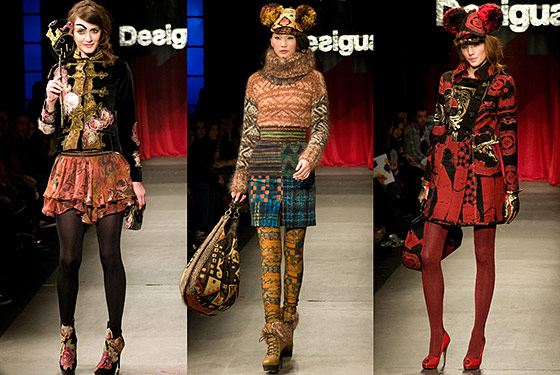
photo via: NY Mag

Although it is nothing new for designers to collaborate with commercial brands, the continuity of this trend shows that such collaborations are here to stay. Designers working for commercial brands is becoming a more common theme. For example, even haute couture designer Christian Lacroix, recently announced it's collaboration with Spanish label Desigual for the Fall 2011 collection. Today, collaborations can happen anywhere and with anyone.

Therefore, the idea of collaboration could be something to seriously reconsider and expand upon.
As collaboration becomes an essential factor in developing unique or special products, one must ask themselves how we can further the idea of  "collaboration" in our own product and idea developments.
Would businesses be reorganizing their internal structures? Perhaps. Would jobs require multi-skilled backgrounds? Most likely. Even in one of our last articles in regards to the birth of the edvitorial, the overall conclusion is the same. We are moving toward more and more of an integrated society, work place, and culture. How are we going to adapt?

Tuesday, January 25, 2011

The Genesis of the "Edvitorial"

Beginning early of last year, many fashion brands and retailers began to seriously reconsider the potential of online sales and digital media. Though many at first were pessimistic about it's capabilities, 2010 birthed a wide range of fresh, innovative ideas, as mentioned in our earlier posts: technologically-advanced fitting rooms, iPad apps, blogzines, and unconventional curated online-shops, just to name a few. So, naturally, this year is sure to bring about more ingenious discoveries and experiences, as last year was a time of just simply scratching the surface. Today, we focus in on the emerging trend of brand content, a combination of content, commerce, and fashion, as we see it as the number one fashion marketing trend to watch for in 2011.

photo via: Net-a-Porter

To start, Net-a-Porter, the widely successful online luxury boutique, recently introduced a "magazine" section to their site. With weekly issues, their digital magazine has everything a traditional paper copy would have: articles featuring new designers, reviews of the latest films, inspiration shots behind their photo shoots, and trend reviews of what's in for next season. But what's even better is that the content is directly connected to their online shop. It's true that it's not the same experience as physically holding a fresh glossy magazine in your hands to browse at your perusal, but clicking through a highly funded, well-executed online zine and then having the ability to immediately buy what you see is pretty neat, (and maybe even better). Their men's department, MrPorter.com, is also moving into a similar direction as they recently hired Jeremy Langmead, former editor of British Esquire, as it's new editor in chief.

photo via: WWD

Designer and commercial brands alike have also followed suit with similar ideas to engage their guests: Donna Karan shares her "journal", Tory Burch offers her city guides, Anthropology has The Anthropologist, Alice+Olivia shares their 4 AM Finds, and Club Monaco has it's own Culture Club. Even Best Buy, the mega electronic store, recently saw in-store sales shrink under pressure from the Web and in response, launched On, a digital mag-a-log with editorial content and advertisement from other brands. Catered to electronic enthusiasts, they offer everything from gift ideas, product reviews, "Geek Squad" tips, and tons of how-to's for your new toys and gadgets. Realizing that there are more people online, many brands are realizing the importance of generating conversation with their customers and keeping them interested through this new platform.

photo via: eBay

Earlier this month, eBay hired Andrea Linett, former creative director of Lucky magazine, and appointed her as their new creative director of eBay Fashion. Attempting to enliven the experience of online shopping to a more digital flea market, they are working on adding more upscale imagery to recreate the same feel of a glossy magazine. With an edition of flash sales and exclusive collections with designers like Derek Lam, eBay is on it's way in establishing it's presence in the online fashion and apparel industry.

Since bloggers have really pioneered the way for the marriage of fashion and social media, it only makes sense that Tumblr, the image-heavy platform, hired Rich Tong, the founder of the user generated street style site Weardrobe.com, and appointed him as the newly created role of fashion director. One of their first events include sending 20 of their bloggers to the upcoming New York Fashion Week and hosting a real-time feed of their content at Tumblr.com/nyfw. Participating Tumblrs include What I WorePeace, Love, Chanel; and SaraZucker.com. All bloggers will receive complimentary flights, accommodations, dates with brands and designers, and access to several shows. They will also be attending the Independent Fashion Bloggers' conference and the Bloglovin awards. 

Although Tumblr did not begin as a fashion-focused blog site, it has become a host to thousands of fashion bloggers, largely inspiration-based blogs, posting product shots, runway images, and editorials. They are valuable to brands as their sites are like free advertisement, reaching young fashionistas all across the world in a powerfully influential way through peer recommendations and conversation. Making fashion more transparent, bloggers have become an invaluable asset to many brands today.


H&M has taken blogger collaborations to the next level and launched a limited collection with the Scandinavian personal-style blogger Elin Kling as the guest designer. With a list of past collaborators including renowned design houses like Lanvin, Stella McCartney, and Karl Lagerfeld, H&M's decision to collaborate with a blogger who only launched her site in 2007 reflects a huge shift in who the customers are looking up to for style inspiration.

14-year-old blogger Tavi Gevinson also found blogging as a stepping stone to achieve greater opportunities, appearing in articles for US Harper's Bazaar, Teen Vogue, and holds future plans to launch a new magazine with Jane Pratt, founder of the now defunct Jane magazine.

We no longer live in the times where publishing, media, and retail businesses act as separate entities. The future calls for a more integrated way of doing business; the lines have blurred and multi-tasking is essential to every fashion professional's resume.

WWD names this new marketing tactic as "edvertorial", advertising meets editorial, birthed from social media and the convergence of entertainment and marketing. Tom Jarrold, chief marketing officer at A|X Exchange states, "The effect on the consumer is a more rich experience. It's a message that can be a part of and interact with instead of it being broadcast at them." If done correctly, advertising is less in-your-face and more subtly integrated to the modern shopping experience. Instead of feeling hassled and bombarded by retailers, customers are more excited to shop as companies have learned to ingeniously incorporated marketing skills through a combination of social media and capabilities of the digital platform.

As the online world offers an infinite amount of space and a world-wide audience, companies have more flexibility and creative capabilities to drive their businesses. However, creating content that people will pay attention to while being careful of presenting the right personality to the brand is key. With this new trend, not only will we be seeing innovative brand strategies, but also a shift in job roles and skill sets. What we are seeing now is just a glimpse of what we mentioned earlier in our video last year. It's exciting to see and we are definitely keeping our eyes open to share with you with what will happen next.

Wednesday, May 12, 2010

Art & Fashion

Although the recession has brought many economic downturns and financial upsets, these difficult times has in many ways taught us to reevaluate our core values and appreciate the simpler things. And with that, has come a revival and stronger necessity for the arts and culture. Whether it offers one a new sense of hope, freedom, or joy, the arts have always played a major role in enhancing our every day lives. And with our current economic state, the art scene is much more innovative and important than ever.

The fashion industry is a major part of this artistic resurgence, and it is evident in the recent growth of collaborations between artists and designers, new mixed media projects, and inventive initiatives. These rough times have brought fresh, exciting paths of cross-fertilization, where fashion, art, music, and literature can all intermix on one platform.


Let's begin with one of the most apparent trends: fashion films. Today, cinematography is an essential tool of fashion marketing for any forward-thinking fashion house. Bringing music, movement, and story-telling together, small up-and-coming designers and international fashion houses alike take advantage of film to add dimension to their brand, while offering something more personal and unique to their audience. Marni, for example, recently collaborated with video artist Rohan Wadham for its 2010 summer collection, which was released in January. And Prada collaborated with the Chinese avant-garde film maker Yang Fudong to create a nine-minute black-and-white silent film, titled "First Spring". Yves Saint Laurent, Marni, Rebecca Taylor, and Steven Alan -- none of whom have ever advertised on television -- have all released online films within the last six months. Steven Alan is currently working on his next film project due out in the fall, collaborating with four directors to each produce a film on the same theme.

Fashion designers have always been influenced by the art community; and over the years, the two worlds have become more integrated where it is no longer black and white. There is a growth of a more collaborative process where artists are further involved in fashion branding and design, creating mutual support amongst the fashion and art community. Chanel and their Mobile Art Project, Diesel and their sponsorship of new designers, Rolex and it's mentoring program, and Prada and it's art Fondazione are just a few examples. What is more unique about this, however, is that these financially difficult times have also influenced the luxury market to give back to communities, encouraging a spirit of compassion and modesty, along with creativity and culture.

Members of the LVMH Young Arts Project, photo via: How to Spend It

One of the pioneering corporate companies is Louis Vuitton. Their most recent program, the Young Arts Project, collaborates with five of London's leading art institutions -- the Hayward Gallery, the Whitechapel Gallery, Tate Britain, the Royal Academy of Arts and the South London Gallery -- to provide underprivileged teens ages 13 to 20 an opportunity to explore, learn, and express themselves through art. Its aim is expressed in a Louis Vuitton statement: "to nurture an exploration, enjoyment, and passion for the arts among young people which they can take into adult life and perhaps follow as a career pathway." Starting off as a three-year program, selected students will have the opportunity to attend a five-day-long Louis Vuitton Summer Academy, and be part of organized visits to auction houses and artists' and film studios. Encouraging local communities to have more access to the art world, Louis Vuitton, as a luxury brand, moves away from it's extravagant and materialistic stigma, as such programs bring a greater sense of social awareness and responsibility to the corporate scene. While corporate sponsorship has always been around, Louis Vuitton is a leader in developing projects that are both responsible while being innovative and creative.

 As we live in a time where everything is rapidly changing and evolving, fashion and art rise at the forefront for the vitality of our culture. And as Pierre-Alexis Dumas, artistic co-director of Hermès, states, "The only reason we support art is because the relationship between art and craft is the building block of civilization." So although the recession has brought many of us to focus more on budgeting our finances and observing what is going on in the stock market, perhaps we all need to take a deep breath, appreciate the beauty around us, and remember that the hope of our future lies far beyond what is in our bank account.

Wednesday, March 24, 2010

Nothing to Hide

One of the biggest trends of our times is transparency-- and we're not just talking about sheer tank tops or blouses here. What we are seeing is not limited to the runway fashions with trends that may not withstand more than a few months, but rather a cultural shift that is drastically changing the way we live, feel, and think as individuals and active members of society.

As we have many times discussed the rising popularity of social media networks and technological advancement of all industries, along with these is more openness and transparency. Networks like Facebook, Twitter, and LinkedIn have become so integrated with how we interact with others, both in our personal lives and business, that we are now accustomed to, and even expect, to have access to what everyone is up to and letting others know about us. As communication is becoming faster, wider, and easier, people seem to be less concerned about invasion of privacy, or at least there is now a whole new set of standards.

                              Cast of Kell on Earth via: Pop Tower

In turn, this mentality has affected every industry in the way companies market themselves and interact with their customers. The fashion industry has become more open with what goes "behind-the-scenes"
as fashion-related reality TV shows have increased in popularity with new shows coming up every year, like this year's newest hits Kell on Earth and Launch My Line. There is also more openness in the retail segment. Last year, the always forward Opening Ceremony created a blog, giving a behind-the-scenes knowledge of their staff, collections, and personal interests. And more recently, J. Crew began sharing a selection of clothing handpicked by their creative director, giving a more personal shopping experience to their clients, as well as interviews with their favorite muses, sharing who and what inspires them.

                                                via: J. Crew

In addition, there is also a growing number of websites designed exclusively to review a product or company. Trip Advisor, for example, is one of the most popular and trusted travel review sites today, boasting with over 30 million reviews on more than 490,000 hotels and attractions, with over 45 million monthly visitorsYelp, attracting 26 million monthly visitors with over 9 million local reviews, has also become the go-to site to review practically anything in any US city, whether it's which restaurant to dine at, which mall to shop, or which dentist to go to. But there are also more specific review sites like MakeupAlley.com, dedicated to reviewing beauty products, or MySears.com, focused solely on reviewing Sears products.

As we live in a globally connected society where communication is all about real time, the future of any industry is all about having real conversations with their customers and knowing how to best respond to it. Simply put, consumers are better educated, and they want to know more. As more information is available, people are more interested in the bigger picture of things as it is no longer just about the final product. A company's stance on health, social, ethical, and eco responsibility all have a say in the final purchase.

There are now many tools designed to help support this. Shopsavvy, an Android app, allows one to scan almost any barcode using the phone's camera, and it will then search over 20,000 online and local retailers to find the best price. Fatburgr, a website and iPhone application, allows one to search the nutritional facts of almost every fast-food restaurant. One of our favorites is the GoodGuide, a website and iPhone application providing information for the eco-conscious consumer, evaluating the life cycle of over 70,000 products. Project Label is another, creating "people-powered company nutrition labels", showing a company's social and environmental impact. Using the power of the web, the site allows consumers, businesses, and organizations to add, discuss, and vote on credible news, media, and research to help build these labels.

                                            via: Inhabitat

With websites and tools like these, it is only more beneficial for companies to be more transparent about their business practices and take more responsibility. As there is a growing number of websites such as these, there is very little room to hide and much less space for error.

And since we've mentioned Walmart in our previous post, we want to point out that last July, they announced plans to develop a sustainable product index, evaluating the sustainability of all their products. Beginning with a survey of its more than 100,000 suppliers, they plan to focus on four specific areas: energy and climate; material efficiency; natural resources, and; people and community. Walmart's president and CEO has a clear vision of the future, stating, "[Customers] want information about the entire life cycle of a product so they can feel good about buying it. They want to know that the materials in the product are safe, that it was made well and that it was produced in a responsible way. We do not see this as a trend that will fade. Higher customer expectations are a permanent part of the future."

We can't help but agree more. As transparency becomes more in demand, tools that help sustainable consumption is integral. And overall, it's becoming more difficult to separate technology with sustainability as the two are extremely interlinked. In order for brands and products to succeed today, overcoming scrutiny and withstanding a society that demands so much, companies must think more strategically; and that means being more engaged with their customers, being more honest, and ultimately being more responsible.

Tuesday, December 1, 2009

"Made in North Korea"

Besides their leader's cultish personality and a never-ending threat of nuclear tests, there is very little we know about one of the world's most reclusive nations, North Korea. But to even remotely consider North Korea as a future hub of fashion is probably the last thing on all our minds.

A group of Swedish entrepreneurs, however, thought differently; and in 2007, Jacob Åström, Tor Rauden Källstigen and Jakob Ohlsson started Noko Jeans. Because there is so little known about North Korea, the members of Noko Jeans were interested in knowing more about the country; and Noko Jeans was their way of gaining access.

After a year of email correspondences, negotiations, and business trips to North Korea, they managed to seal a deal with the country’s biggest mining company to produce 1,100 pairs of two styles of jeans, expected to go on sale this Friday, December 4th.

Priced at 150 Euros each and stitched with a "Made in North Korea" label, the team has designed limited straight-cut, dark-washed jeans, stark in its design to resemble the North Korean landscapes. With the launch includes a documentary of the company's trip to North Korea, exposing the world of it's rather transparent production method and further insight of an enigmatic nation.

As it is North Korea’s first denim product, it is likely that Noko’s first collection of jeans, Maneuvers in the Dark, will sell out in no time. However, although Noko has the cool, edgy look for a premium denim brand, it is still questionable as to whether their “Made in North Korea” tags will be embraced by their denim loving consumers. But even then, as North Korea may not have the best connotations, it’s isolated and somewhat secretive identity may work to Noko’s advantage, providing an unmarked territory as grounds to help spark a more positive association.

Noko’s website does not yet include the details of where you can purchase these jeans, but check back shortly and we’ll let you know as soon as we find out!

Via: Refinery29

Tuesday, July 14, 2009

Saving the world through social media


Nonprofit organizations can be many things: caring, diligent, altruistic, painfully earnest. One thing they rarely are, though, is chic. Enter charity: water, started by Scott Harrison, an ex-party promoter who leveraged his natural flair for marketing into a group that, in only 5 years, has helped provide clean water to almost 1 million people in third-world countries.

With only 11 employees, charity: water has raised money (over $10 million so far!) in ways so catchy, for-profits can only dream of catching up: asking people with September birthdays to request donations in lieu of presents; holding "Twestival" gatherings on Twitter; and producing videos, including the one above. The group has nearly 600,000 followers on Twitter — slightly more than the population of Washington, DC.

Declares Harrison, “Guilt has never been part of it. It’s excitement instead, presenting people with an opportunity — ‘you have an amazing chance to build a well!’ ”

Via Nick Kristof in the NYT

--
Update 7/21/09: Social media can be a winner for for-profit businesses, too. A study in PSFK today shows a correlation between engagement in social media outlets and financial success for companies including Starbucks, Dell, and eBay.